OUR PRODUCTS
Accredited ABB channel partner supplying Low Voltage Electrification Products in South Africa
Hagar is a trusted South African stockist of genuine ABB products.
We supply electrical contractors, switchboard builders, and generator OEMs across Southern Africa with high-performance circuit protection, electrification and automation products for maximum safety and reliability.
We pride ourselves with having a good stock holding of the ABB range of Relays & Bases, Fuse Holders, Contactors, Motorised Change-Over Switches (OTM), Miniature Circuit Breakers, Moulded Case Circuit Breakers (Tmax), and Air Circuit Breakers (Emax).
Beyond product supply, our in-house engineering and design team provides comprehensive technical support, including custom CAD panel layout drawings and on-site integration and commissioning.
Backed by deep inventory levels, we deliver market-leading pricing, availability, service, and support to help minimise project downtime and ensure you have the right solution when you need it.
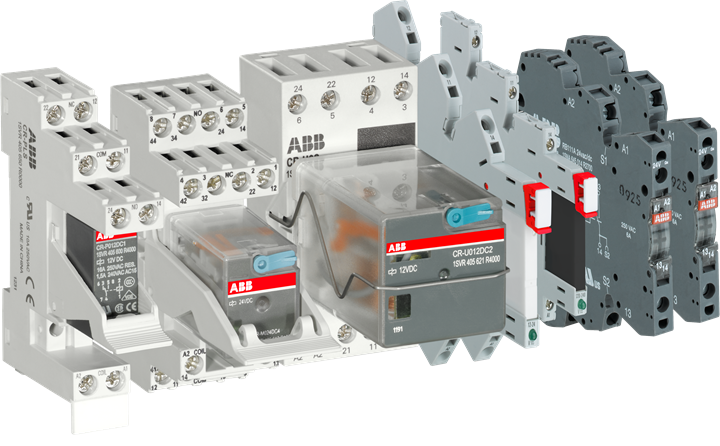

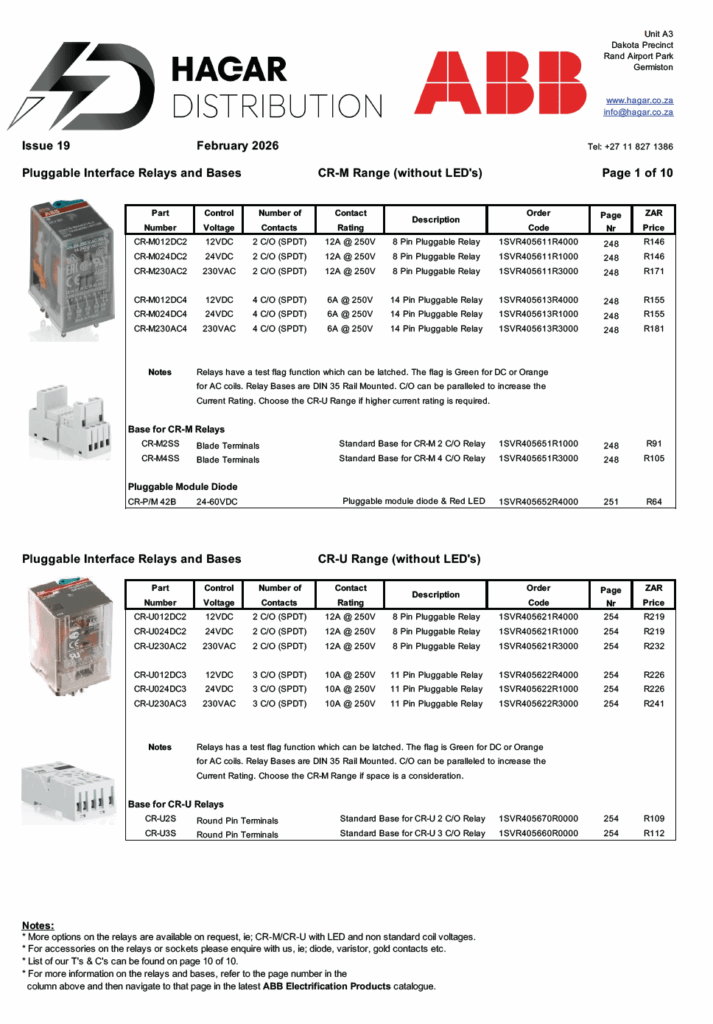
ABB Pluggable Interface Relays & Bases
Ensure seamless electrical isolation and signal conditioning with ABB pluggable interface relays. We stock a comprehensive range of interface modules, and matching pluggable bases for industrial control panels.
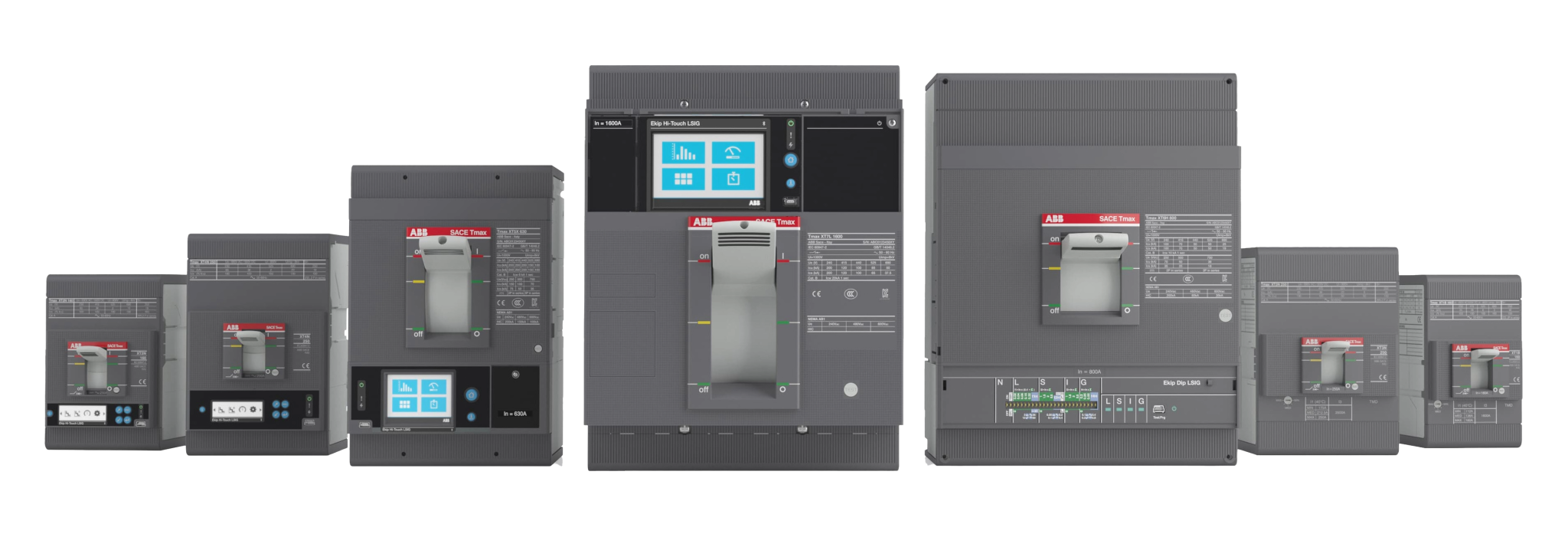
ABB Moulded Case Circuit Breakers (MCCBs)
Browse our range of ABB Moulded Case Circuit Breakers designed for heavy industrial and commercial power distribution. We stock multiple frame sizes, trip units, and breaking capacities with full technical backup.
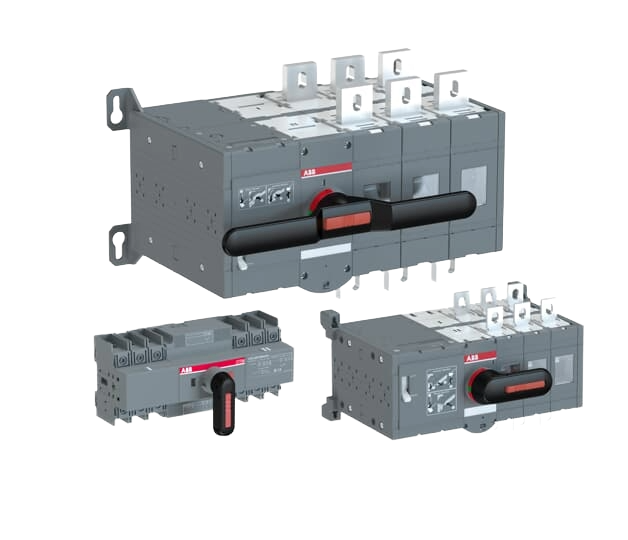
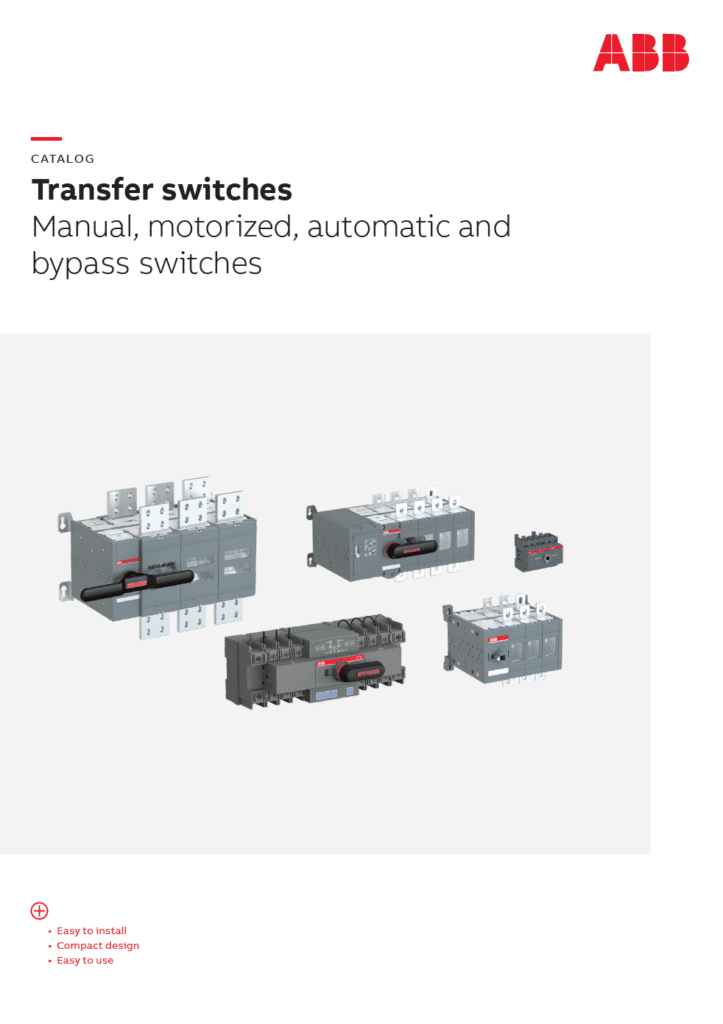
ABB Manual & Motorized Change-Over Switches
Secure your power transition with ABB change-over switches. Engineered for reliable transfer between grid and backup generator power, we stock both manual and automated motorised configurations.
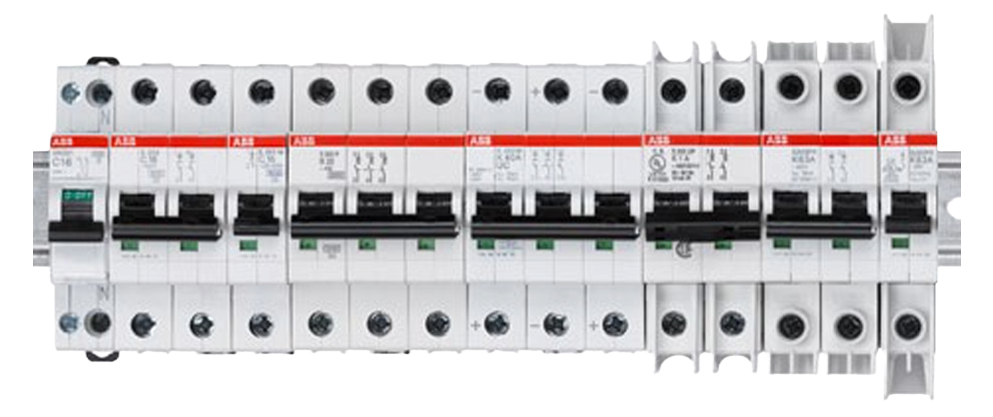
ABB Miniature Circuit Breakers (MCBs)
Protect your electrical installations with premium ABB miniature circuit breakers. Our inventory covers standard DIN-rail profiles with varying curve characteristics (B, C, D) for precise overcurrent protection.
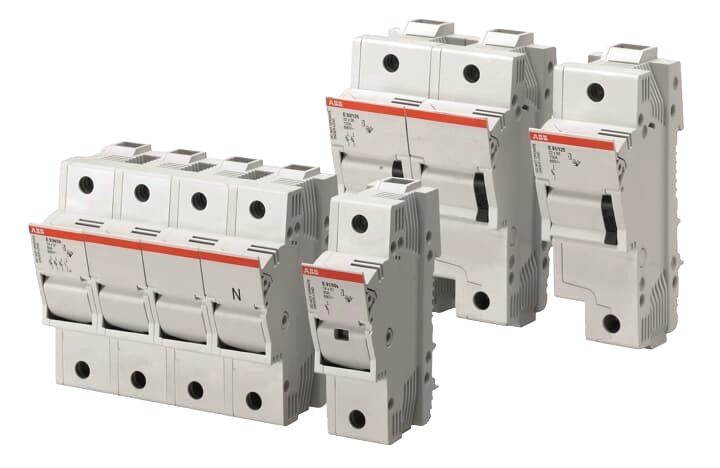
ABB Fuses & Fuse Holders
Protect your electrical equipment with heavy-duty ABB fuses and fuse holders. We stock a robust selection of DIN-rail mounted cylindrical fuse holders and fuse switch disconnectors engineered for high-breaking capacity short-circuit protection.
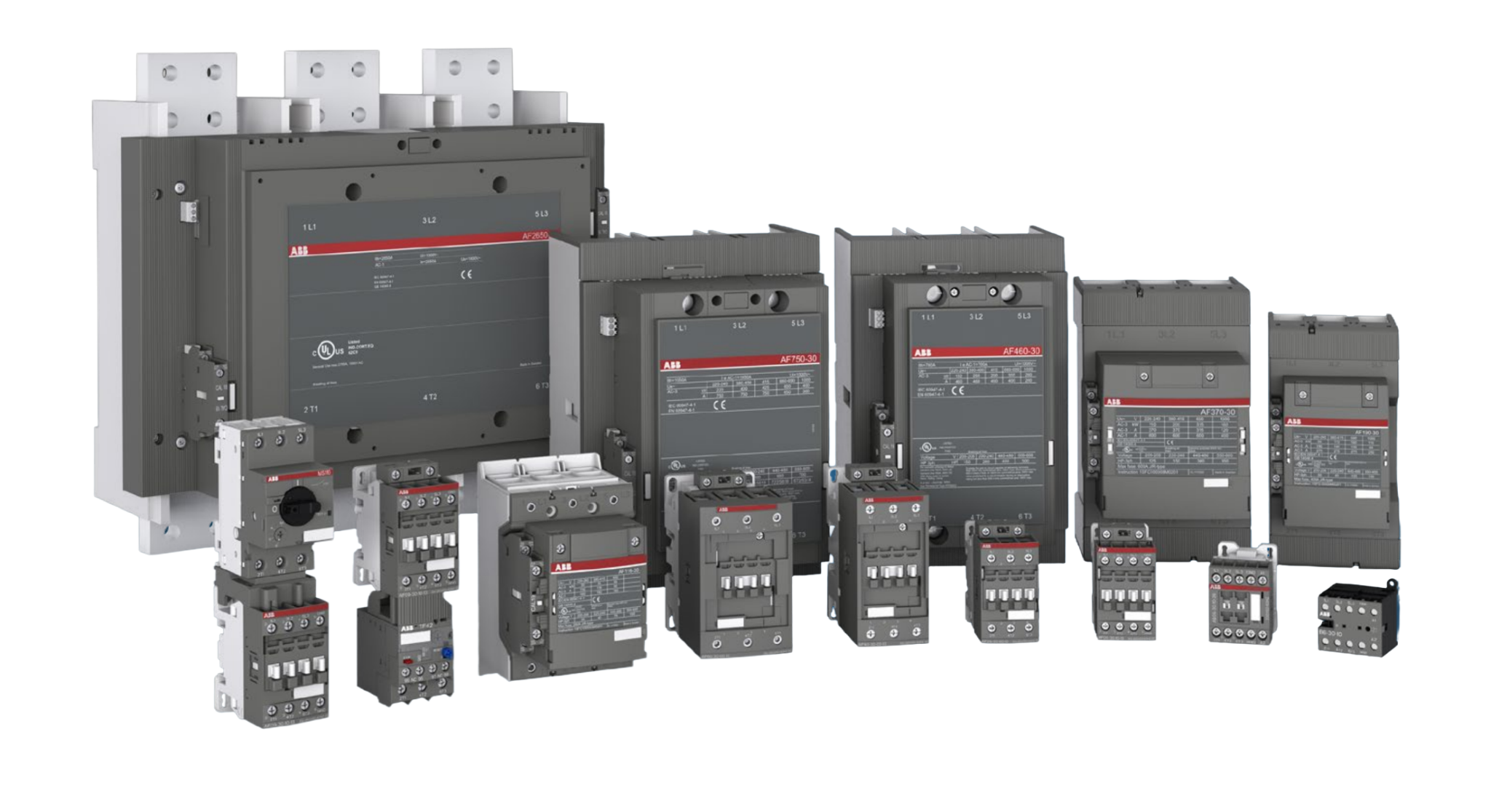
ABB Industrial Contactors & Overload Relays
Efficient motor control starts with the ABB AF contactor series. These compact blocks feature electronic coils that handle wide voltage fluctuations, reducing panel energy consumption and downtime.
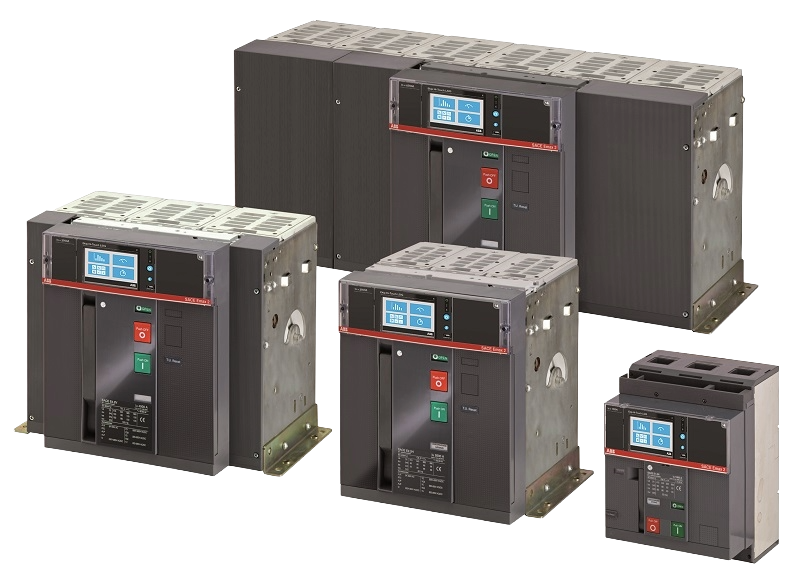
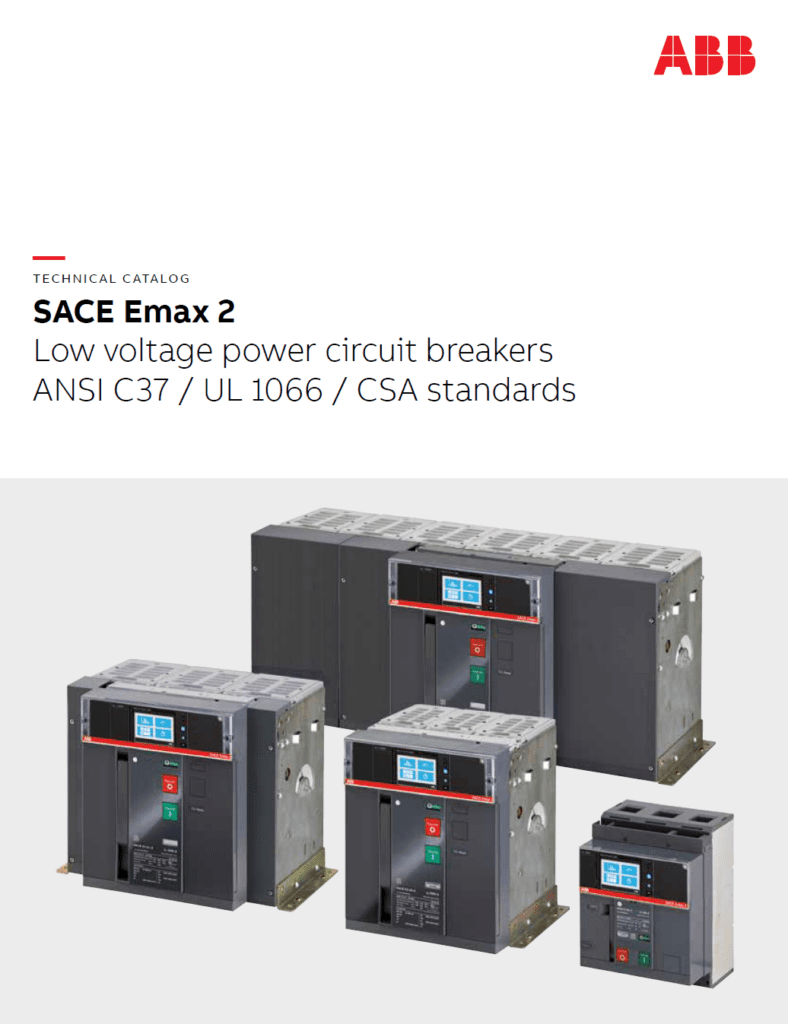
ABB Air Circuit Breakers (ACBs) & Emax
Manage high-power electrical plants safely with ABB Air Circuit Breakers. Designed for low-voltage power distribution up to 6300A, featuring integrated power management and advanced connectivity options.


Download the ABB Pricelist


EXPERT SUPPORT
Frequently Asked Questions
Does Hagar offer official ABB training?
Yes. We conduct structured training sessions on a regular basis covering both theoretical fundamentals and practical hands-on applications. During the practical sessions, participants gain experience assembling, configuring, and wiring various motorized circuit breakers.
Can T-Range motor operators be fitted onto XT-Range breakers?
For XT5 and XT6 frames, motor operators from the T5 and T6 series are not compatible. However, on T7/XT7 frames, shunts, motor operators, and Ekip 1.2 trip units are cross-compatible.
Will T7 accessories fit on an XT7 breaker?
Yes. Internal and external accessories—including shunt opens, motor operators, and trip units—share the same physical chassis design and are cross-compatible between T7 and XT7.
Will T-Range busbars fit directly onto the new Tmax XT Range?
Because ABB designed the XT range as the successor to the T range, terminal geometry changed across several frame sizes:
T1 / T2 to XT1 / XT2: No, they are not a direct fit.
T3 through T7 to XT3 through XT7: Yes, they can generally be fitted, but they may require minor terminal adaptors or modifications.
What is the difference between a withdrawable breaker and a fixed breaker?
Fixed Breaker: Permanently mounted and wired directly into the panel. It has a lower initial unit cost but requires longer scheduled outages and more manual labor to isolate for maintenance.
Withdrawable Breaker: Mounts into a fixed cassette/cradle allowing the breaker unit to be racked in or out quickly. While initial costs are higher, it significantly reduces system downtime during maintenance or replacements.
Can existing Emax (E2/E3) withdrawable breakers be installed into new Emax 2 cradles?
No. Original Emax (E2/E3) breakers and Emax 2 breakers use entirely different mechanical guiding systems, busbar positions, and secondary electrical contact interfaces. They are not backward compatible without full retrofit conversion kits.
Are spare parts still available for the older ABB T-Range?
Yes, but availability is limited as the range phased out. Certain items are subject to extended lead times. We recommend checking specific part availability with our technical sales team or evaluating migration to the Tmax XT series.
Does the ABB contactor range offer 12V DC operating coils?
No. Standard ABB contactors (including the AF range) do not support 12V DC coil voltages.
Can you replace the coils on ABB AF range contactors?
No. AF series contactors utilize integrated electronic coil control modules housed within sealed assemblies and cannot be replaced individually.
Can you use the XT2 or XT4 circuit breaker for synchronization applications?
Yes. The XT2 and XT4 frames can be used in synchronization applications when configured with the appropriate electrical accessories and trip unit modules.
Does ABB offer 1000V rated circuit breakers?
Yes, ABB manufactures specialized circuit breakers rated for operations up to 1000V AC and 1000V DC across select Tmax XT and Emax 2 frame sizes.
Can you mechanically interlock 3 circuit breakers together?
Yes, mechanical interlocking for 3-breaker systems (such as Main-Tie-Main or Generator-Grid arrangements) is supported on air circuit breaker frames starting from the Emax 2 E1.2 frame size and larger.
How far down can you set the trip value on an ABB thermal-magnetic or electronic breaker?
Depending on the specific trip unit installed (e.g., TMD, TMA, or Ekip electronic units), adjustable protection thresholds can typically be dialed down to 40% of the breaker’s nominal rating (In).
Does ABB offer 12V DC motor voltages on OTM changeover switches?
No. OTM motorized changeover switches are offered in standard control voltages such as 24V DC, 110V AC/DC, and 220–240V AC, but 12V DC option is not available.
Can Tmax XT1 to XT4 breakers be ordered with a closing shunt?
No. For XT1 through XT4 frames, remote closing is executed directly through a motor operator mechanism rather than an independent closing coil.
Are bypass switches available for ratings above 800A?
No. Manual bypass switches above 800A have been discontinued across the standard lineup.
Does the 63A OTM motorized changeover switch come standard as a 4-pole unit?
No. The standard configuration is 3-pole; a 4th pole module must be ordered separately as an add-on accessory if switched neutral is required.
What is the primary purpose of a motor operator (MOE) on an ABB Tmax XT circuit breaker, and how does it handle local vs. remote control?
The motor operator allows you to close and open the circuit breaker electronically from a remote location or automation system by physically operating the internal spring mechanism. ABB MOE modules feature a “Manual/Auto” selector switch on the front faceplate; switching to “Manual” disengages remote commands so technicians can safely operate the lever during maintenance.
What is the main operational difference between an ABB MOD and an ABB MOE motor operator?
MOD (Direct-Acting): Designed for smaller frames (XT1, XT3). It directly flips the breaker’s toggle mechanism on or off immediately upon receiving a command.
MOE (Stored-Energy): Designed for larger frames (XT2, XT4, XT5). It drives an internal motor to pre-charge a mechanical spring system, allowing high-speed opening and closing actions.
If an XT motorized breaker trips on a fault, will a remote "Close" command restore power right away?
No. When a breaker trips on a fault, it enters the Tripped position (indicated by the mechanical reset button popping out). A distinct Reset command must be issued to the motor operator (or manually performed on the faceplate) to reset the internal toggle linkage before a “Close” command will be accepted.
How does the "Manual / Auto" toggle switch on the front of an ABB XT motor operator protect field technicians?
Setting the switch to Manual electrically and mechanically isolates all remote control inputs. This prevents a PLC, SCADA system, or remote operator from triggering an unexpected breaker operation while a maintenance technician is manually charging springs or servicing the unit.
Can the same ABB MOE unit operate across both AC and DC control voltages, or are they dedicated?
No. ABB MOE motor operators are voltage-specific accessories. You must select the version that matches your system control voltage (e.g., 24V DC, 110–125V AC/DC, or 220–250V AC/DC). Powering them with incorrect voltage will permanently damage the internal electronic control board.
Why is it recommended to wire an auxiliary contact (AUX) in series with the motor operator's control lines?
Wiring an early-make or standard auxiliary contact (specifically Q/1 or SY contacts) prevents the motor from cycling endlessly or staying energized if a remote control command becomes stuck high. It cuts power to the control circuit immediately after the breaker reaches its intended position.
What is the purpose of an ABB Shunt Opening Release (SOR) inside an XT series breaker?
A shunt trip allows you to open the circuit breaker remotely via an electrical signal. When a voltage pulse is injected into the SOR coil, it creates an electromagnetic field that physically trips the internal spring latch mechanism, dropping the breaker into the “Open/Tripped” state.
Can an ABB SOR shunt trip coil be left continuously energized to lock a breaker open?
No. Standard SOR coils are rated for impulse operation (intermittent duty). Keeping them continuously energized will overheat and burn out the internal winding. Use an Undervoltage Release (UVR) if continuous fail-safe electrical interlocking is required.
What is the difference between an un-cabled (SOR) and cabled (SOR-C) shunt trip?
Un-cabled (SOR): Requires manual field wiring terminated directly to screw terminals on the breaker’s internal accessory block.
Cabled (SOR-C): Factory pre-wired with an integrated wiring harness and socket connector, enabling faster plug-and-play installation during panel assembly or retrofits.
Where inside the SACE Tmax XT breaker is the shunt trip installed?
Behind the front protective cover, the shunt trip accessory drops into a dedicated slot on the left-hand side of the internal mechanism cavity. The right-hand cavity slots are reserved exclusively for auxiliary (AUX) and signal/alarm (SY) contacts.
What crucial power supply specification must be met for a Tmax XT shunt trip to guarantee a successful remote shutdown?
The control power supply must be capable of delivering the peak inrush current required by the coil at the exact millisecond of activation. If the control transformer or power supply sags during initiation, the breaker may fail to trip and damage the coil.
What unique advantage does ABB’s AF series contactor coil technology offer over conventional coils?
AF contactors feature wide-band electronic coil management that accepts both AC and DC control voltages across wide ranges (e.g., 100V–250V AC/DC in a single coil). This technology prevents coil chatter during voltage sags, eliminates operational hum, and reduces energy consumption by up to 80% compared to traditional contactors.
When selecting an ABB AF contactor, what is the critical difference between Utilization Categories AC-1 and AC-3?
AC-1: Applies to non-inductive or slightly inductive resistive loads (e.g., industrial heaters) where breaking current equals nominal operating current.
AC-3: Applies to squirrel-cage induction motors. The contactor must handle high locked-rotor starting currents (5 to 7 times full-load current) during making and break standard running currents during shutoff.
Can I use an ABB breaker for a synchronization application without a shunt release using only an open signal?
No. Synchronization and auto-transfer control schemes require an active Shunt Opening Release (SOR) or Undervoltage Release (UVR) coil to guarantee immediate, millisecond-level mechanical tripping during out-of-phase conditions or safety interrupts.
What is an Undervoltage Release (UVR / UV Coil)?
An Undervoltage Release (UV coil) is an electrical accessory that acts as a fail-safe shunt. It continuously requires control voltage to stay closed; in the event of power loss, voltage drop, or emergency stop trigger, the coil loses excitation and immediately trips the motorized breaker open.
What is the difference between a standard Shunt Opening Release (SOR) and an Undervoltage Release (UVR)?
Shunt Opening Release (SOR): Operates on voltage presence. It requires an active electrical voltage signal injected into the coil to trip the breaker open (pulsed intermittent duty).
Undervoltage Release (UVR): Operates on voltage absence. The coil must stay continuously energized for the breaker to close. Loss of control voltage instantly opens the breaker, acting as a fail-safe trip mechanism.